AI’s Impact on US Education by 2026: A Deep Dive
Advertisements
Latest developments on the impact of artificial intelligence on U.S. education by 2026, with key facts, verified sources, and what readers need to monitor next in the United States, presented clearly.
The Impact of Artificial Intelligence on U.S. Education by 2026: A Comprehensive Analysis (COMPARISON/ANALYSIS) is shaping today’s agenda with new details released by officials and industry sources. This update prioritizes what changed, why it matters and what to watch next, in a straightforward news format.
Understanding the AI Revolution in U.S. Education
The landscape of U.S. education is on the cusp of a profound transformation, driven by the rapid advancements and integration of artificial intelligence. By 2026, AI is expected to redefine teaching methodologies, learning experiences, and administrative processes across the nation’s schools and universities.
This shift is not merely incremental; it represents a fundamental re-evaluation of how knowledge is imparted and acquired. Stakeholders, from educators to policymakers, are grappling with both the immense potential and the significant challenges presented by this technological wave.
A comprehensive analysis of AI’s role reveals a complex interplay of innovation, ethical considerations, and practical implementation hurdles that demand immediate attention and strategic planning.
Personalized Learning: A New Frontier
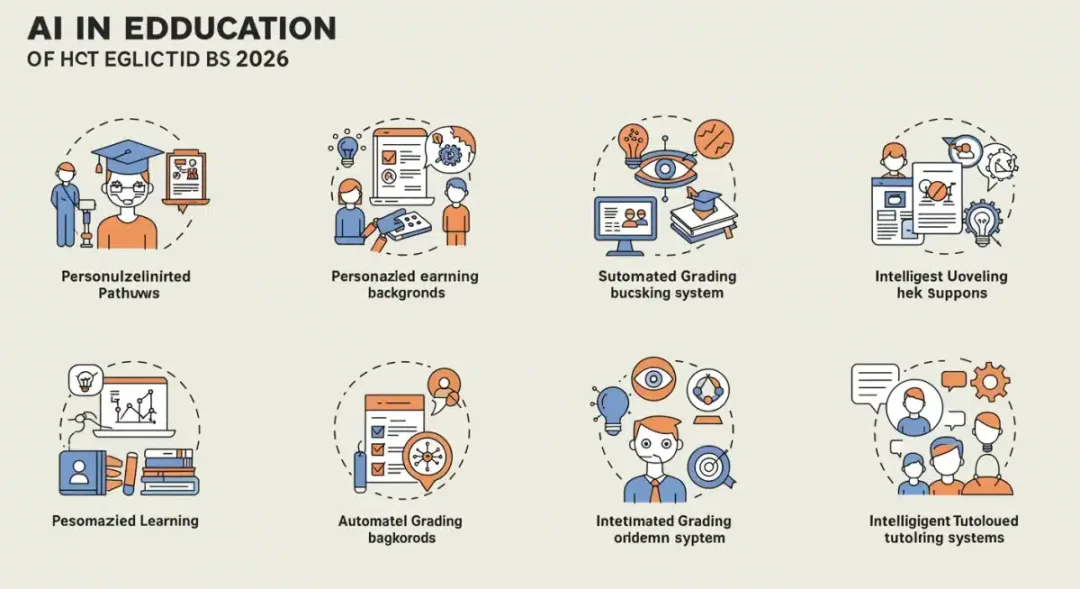
One of the most touted benefits of AI in education is its capacity to deliver highly personalized learning experiences. AI algorithms can adapt content, pace, and teaching styles to individual student needs, a capability traditionally difficult to achieve at scale.

This personalized approach holds the promise of addressing diverse learning styles and improving educational outcomes for a wider range of students. The goal is to move beyond a one-size-fits-all model towards an education system that truly caters to each learner’s unique journey.
Early implementations show promising results, with students demonstrating improved engagement and comprehension when utilizing AI-driven adaptive learning platforms. The impact of artificial intelligence on U.S. education by 2026 will largely be defined by how effectively these personalized systems are integrated.
Adaptive Learning Platforms
Adaptive learning platforms leverage AI to continuously assess student performance and adjust instruction accordingly. They can identify knowledge gaps and provide targeted interventions, ensuring students master concepts before moving on.
These systems offer real-time feedback, allowing students to understand their mistakes immediately and learn from them. This dynamic interaction fosters a more efficient and effective learning process for all.
Intelligent Tutoring Systems
AI-powered intelligent tutoring systems act as virtual mentors, offering individualized support and guidance. They can answer questions, explain complex topics, and even simulate conversations to enhance understanding.
Such systems are particularly valuable for subjects requiring problem-solving skills, providing students with a safe environment to practice and receive immediate, constructive feedback. The impact of artificial intelligence on U.S. education by 2026 will see these systems become more sophisticated and widespread.
Automating Administrative Tasks and Grading
Beyond direct instruction, AI is poised to revolutionize the administrative burden faced by educators. Automating routine tasks can free up valuable time, allowing teachers to focus more on student interaction and curriculum development.
From scheduling and attendance tracking to grading essays and quizzes, AI tools offer efficiencies that can significantly enhance operational effectiveness. This administrative relief is critical for improving teacher well-being and reducing burnout.
The ability of AI to rapidly process and analyze data also offers new insights into school operations and student performance, enabling more informed decision-making. This aspect of the impact of artificial intelligence on U.S. education by 2026 is often underestimated but equally vital.
AI in Assessment and Feedback
AI is increasingly being used to automate the grading of various assignments, particularly in subjects with objective answers. This not only speeds up the process but also ensures consistency in evaluation.
For more complex tasks like essay grading, AI can provide preliminary feedback on grammar, structure, and even content coherence. While human oversight remains crucial, AI significantly streamlines the initial review stage.
Operational Efficiency for Schools
AI-driven systems can optimize school resource allocation, from managing classroom space to forecasting enrollment trends. This helps administrators make data-driven decisions that improve overall efficiency.
Furthermore, AI can enhance communication by automating responses to common parent and student queries, improving accessibility and responsiveness. The comprehensive analysis of AI US education 2026 highlights these operational gains.
Challenges and Ethical Considerations
Despite the immense potential, the integration of AI into U.S. education is not without its challenges. Concerns around data privacy, algorithmic bias, and the equitable distribution of technology present significant hurdles that must be proactively addressed.
Ensuring that AI tools are fair, transparent, and do not perpetuate existing educational inequalities is paramount. A critical examination of these ethical dimensions is essential to harness AI’s benefits responsibly.
Policymakers and educators must collaborate to develop robust frameworks that guide the ethical deployment of AI, safeguarding student data and promoting inclusive access. This is a core component of the impact of artificial intelligence on U.S. education by 2026.
Data Privacy and Security
The use of AI in education involves collecting and processing vast amounts of student data, raising serious privacy concerns. Protecting this sensitive information from breaches and misuse is a top priority.
Schools must implement strict data governance policies and employ robust cybersecurity measures to build trust among students, parents, and the community. The impact of artificial intelligence on U.S. education by 2026 depends on these safeguards.
Addressing Algorithmic Bias
AI algorithms are trained on existing data, which can sometimes reflect and amplify societal biases. If not carefully designed and monitored, AI in education could inadvertently perpetuate discrimination.
Developers and educators must work together to identify and mitigate biases in AI tools, ensuring they provide fair and equitable opportunities for all students. This demands continuous vigilance and ethical review.
Teacher Roles Evolving with AI Integration
The advent of AI will inevitably reshape the role of teachers, shifting their focus from information delivery to facilitation, mentorship, and personalized guidance. Teachers will become orchestrators of learning, leveraging AI tools to enhance their instruction.
This evolution requires significant professional development to equip educators with the skills to effectively integrate AI into their pedagogy. Training must focus not only on technical proficiency but also on critical thinking about AI’s ethical implications.
The impact of artificial intelligence on U.S. education by 2026 will necessitate a redefinition of teacher preparation programs and ongoing support systems. This ensures that educators are empowered, not replaced, by AI.
Professional Development for Educators
Comprehensive training programs are essential to help teachers understand and utilize AI technologies effectively. These programs should cover practical application, ethical considerations, and pedagogical strategies.
Ongoing support and communities of practice can foster a collaborative environment where educators share best practices and collectively navigate the evolving educational landscape. This continuous learning is vital for AI US education 2026 success.
Focus on Higher-Order Skills
With AI handling more rote tasks, teachers can dedicate more time to fostering critical thinking, creativity, and socio-emotional skills. These human-centric competencies are increasingly vital in an AI-driven world.
Teachers will guide students in complex problem-solving, collaborative projects, and ethical discussions, preparing them for future challenges that AI cannot solve alone. This human touch remains irreplaceable.
Equity and Access: Bridging the Digital Divide
The successful integration of AI into U.S. education hinges on ensuring equitable access to technology and training for all students and schools. The existing digital divide could be exacerbated if AI tools are not distributed thoughtfully.
Addressing disparities in internet access, device availability, and technical support is crucial to prevent AI from widening educational gaps. Policy initiatives must prioritize universal access to AI-enhanced learning resources.
This commitment to equity will determine whether the impact of artificial intelligence on U.S. education by 2026 truly benefits all students, regardless of their socioeconomic background or geographic location.
Policy Initiatives for Universal Access
Government and educational institutions must collaborate to fund and implement initiatives that provide equitable access to AI technologies. This includes subsidies for devices, infrastructure development, and community learning centers.
Policies should also address the digital literacy gap, offering programs that teach students and families how to effectively use and navigate AI tools. The comprehensive analysis of AI US education 2026 emphasizes this.
Rural and Underserved Communities
Special attention must be given to rural and underserved communities that often lack the resources for advanced educational technologies. Tailored solutions and targeted investments are necessary to ensure they are not left behind.
Leveraging partnerships with technology companies and non-profits can help bridge these gaps, bringing AI-powered learning to every corner of the nation. This ensures the impact of artificial intelligence on U.S. education by 2026 is truly inclusive.
Curriculum Adaptation and Future Skill Sets
The rapid evolution of AI demands a corresponding adaptation of educational curricula to prepare students for a future workforce increasingly shaped by artificial intelligence. New skill sets, including AI literacy, data analysis, and ethical reasoning, will become essential.
Schools must integrate AI concepts into various subjects, moving beyond traditional computer science courses to foster a broader understanding of AI’s capabilities and limitations. This cross-disciplinary approach is vital.
The impact of artificial intelligence on U.S. education by 2026 will profoundly influence what students learn and how they learn it, preparing them for roles that may not even exist today.
AI Literacy for All Students
It is no longer sufficient to teach students how to use computers; they must also understand how AI works, its societal implications, and how to interact with it responsibly. AI literacy should become a foundational skill.
This includes understanding concepts like machine learning, neural networks, and the ethical considerations of AI. Preparing students for the AI US education 2026 landscape requires this fundamental shift.
Developing Critical Thinking and Creativity
As AI handles more rote tasks, the premium on human skills like critical thinking, creativity, and complex problem-solving will increase. Education must prioritize developing these uniquely human attributes.
Curricula should emphasize project-based learning, collaborative inquiry, and opportunities for students to apply knowledge in novel ways. These skills are essential for thriving in an AI-augmented world.
Investment and Infrastructure Requirements
Realizing the full potential of AI in U.S. education by 2026 requires significant investment in technology infrastructure, from high-speed internet to advanced computing resources. Without adequate infrastructure, AI integration will remain limited.
Funding for AI research and development within educational contexts is also crucial to create tools specifically tailored to learning environments. Public and private partnerships will play a key role in securing these resources.
The financial commitment to infrastructure and innovation will be a defining factor in shaping the long-term impact of artificial intelligence on U.S. education by 2026. This comprehensive analysis underscores the need for strategic investment.

Funding for Technology Upgrades
Schools will need substantial funding to upgrade their networks, acquire AI-compatible devices, and implement robust data centers. These technological foundations are non-negotiable for effective AI integration.
Government grants, philanthropic contributions, and local bond measures will be essential sources of capital to support these necessary upgrades. The impact of artificial intelligence on U.S. education by 2026 demands this financial commitment.
Research and Development in EdTech
Investing in research and development specific to AI applications in education is critical. This fosters innovation and ensures that AI tools are pedagogically sound and effective for learning outcomes.
Collaboration between universities, tech companies, and educational districts can drive the creation of cutting-edge AI solutions tailored to the unique needs of the U.S. education system. This accelerates the positive impact of artificial intelligence on U.S. education by 2026.
Policy and Regulatory Frameworks
As AI rapidly integrates into education, robust policy and regulatory frameworks are urgently needed to guide its responsible deployment. These frameworks must address issues such as data governance, algorithmic accountability, and intellectual property.
Policymakers need to work closely with educators, technologists, and legal experts to develop agile regulations that can adapt to the fast-evolving AI landscape. Proactive policy development is key to mitigating risks.
The absence of clear guidelines could lead to fragmented adoption and unintended consequences, diminishing the potential positive impact of artificial intelligence on U.S. education by 2026. This comprehensive analysis points to legislative action as crucial.
Developing Ethical AI Guidelines
Establishing clear ethical guidelines for the development and use of AI in education is paramount. These guidelines should cover transparency, fairness, and accountability in AI systems.
Ensuring that AI tools are used to augment human intelligence rather than replace it, and that they respect student autonomy, are key ethical considerations. The AI US education 2026 discussion must center on these principles.
Standardization and Interoperability
Promoting standardization and interoperability among different AI educational platforms is vital for seamless integration and data exchange. This prevents vendor lock-in and allows for greater flexibility.
Establishing common technical standards can facilitate the broader adoption of AI tools and foster a more connected educational ecosystem. This will significantly enhance the overall impact of artificial intelligence on U.S. education by 2026.
| Key Aspect | Brief Description |
|---|---|
| Personalized Learning | AI tailors educational content and pace to individual student needs, improving engagement. |
| Operational Efficiency | AI automates administrative tasks and grading, freeing up teacher time for instruction. |
| Ethical Challenges | Concerns about data privacy, algorithmic bias, and equitable access require careful management. |
| Evolving Teacher Roles | Teachers shift to facilitators and mentors, requiring new professional development. |
Frequently Asked Questions About AI in U.S. Education
How will AI primarily change student learning experiences by 2026?▼By 2026, AI is expected to revolutionize student learning through highly personalized pathways. Adaptive platforms will tailor content and pace to individual needs, offering immediate feedback and targeted support. This aims to make learning more engaging and effective, addressing diverse learning styles across the U.S. education system.
What are the biggest challenges for AI integration in U.S. schools?▼The biggest challenges include ensuring data privacy and security, mitigating algorithmic bias, and bridging the digital divide to ensure equitable access. These issues require robust policy frameworks, significant infrastructure investment, and continuous ethical oversight to prevent exacerbating existing inequalities in U.S. education.
Will AI replace teachers in U.S. classrooms?▼No, AI is not expected to replace teachers but rather to augment their capabilities. Teachers’ roles will evolve, focusing more on mentorship, facilitating complex discussions, and fostering critical thinking. AI will handle administrative tasks and provide data-driven insights, allowing educators to dedicate more time to personalized student interaction and higher-order skill development.
What new skills will students need due to AI’s impact on U.S. education?▼Students will increasingly need AI literacy, data analysis skills, and strong ethical reasoning. Critical thinking, creativity, and complex problem-solving will also become paramount. Curricula will adapt to integrate these competencies, preparing students for an AI-driven workforce and fostering responsible interaction with advanced technologies in all aspects of life.
How will policy makers address equity in AI adoption across U.S. education?▼Policymakers will focus on initiatives to ensure universal access to AI tools and training, particularly for underserved communities. This includes funding for infrastructure, device subsidies, and programs to enhance digital literacy. The goal is to prevent AI from widening educational disparities and to ensure that all students can benefit from technological advancements in U.S. education.
Looking Ahead: Navigating the AI Frontier in Education
The profound impact of artificial intelligence on U.S. education by 2026 is undeniable, presenting both unprecedented opportunities and significant challenges. The coming years will be crucial in establishing the frameworks and infrastructure necessary for responsible and effective AI integration. Continued collaboration among educators, technologists, policymakers, and communities will be essential to harness AI’s potential to create a more equitable, personalized, and effective learning environment for all students. Monitoring ongoing developments in policy, ethical guidelines, and technological advancements will provide critical insights into the evolving landscape of AI US education 2026.