Optimizing Your Investment Portfolio for 2026
Advertisements
Optimizing Your Investment Portfolio for 2026: A Deep Dive into Current Market Opportunities explores practical strategies for balancing growth opportunities with financial security.
From artificial intelligence and renewable energy to portfolio diversification, inflation protection, and international investments, understanding market risks can help investors build a more disciplined long-term strategy.
Investment portfolio optimization in 2026 requires investors to evaluate economic conditions, diversify across different assets, and consider emerging opportunities without overlooking the risks associated with financial markets.
Technological innovation, changing interest rates, geopolitical developments, and global economic uncertainty continue influencing investment decisions, creating both potential opportunities and challenges for individual investors.
Developing a successful strategy involves aligning financial goals with risk tolerance, understanding investment costs, and reviewing portfolio allocations regularly rather than relying on predictions of short-term market performance.
Understanding the Current Investment Climate
The investment environment in 2026 reflects a combination of changing economic expectations, technological developments, monetary policy decisions, and ongoing uncertainty across international financial markets.
Investors monitoring inflation, interest rates, employment conditions, and corporate earnings can better understand the factors influencing asset prices without assuming that market movements are predictable.
For anyone researching 2026 economic and real estate trends, effective investment portfolio optimization begins with separating reliable financial information from speculative forecasts and short-term market enthusiasm.
Federal Reserve decisions can influence borrowing costs, bond yields, and investor expectations, while global economic conditions may affect international companies and currency markets.
Corporate earnings and business investment also influence stock valuations, particularly in sectors experiencing rapid technological changes or shifts in consumer demand.
Although these developments create investment opportunities, no economic outlook guarantees positive returns, making disciplined financial planning essential for managing uncertainty.
Emerging Market Opportunities for 2026

Several industries continue attracting investor interest because of technological innovation, infrastructure spending, demographic changes, and evolving demand for products and services.
Artificial intelligence, healthcare technology, energy infrastructure, and renewable energy investments are among the areas frequently discussed when evaluating long-term business opportunities.
However, successful investment portfolio optimization requires considering company valuations, profitability, financial stability, and competitive risks rather than assuming that a promising industry automatically produces attractive investment returns.
The Rise of Artificial Intelligence and Automation
Artificial intelligence and automation technologies are influencing industries ranging from manufacturing and healthcare to financial services, software development, and logistics.
Companies providing semiconductor technology, cloud infrastructure, enterprise software, and automated systems may benefit from increasing demand, but their valuations can reflect substantial expectations for future growth.
Investors considering AI exposure should evaluate financial performance, business sustainability, competition, and portfolio concentration before committing capital to highly valued technology companies.
AI Infrastructure: Semiconductor manufacturers, computing systems, and data center technology.
Enterprise Software: Companies developing AI-powered business applications and automation tools.
Industrial Automation: Robotics, manufacturing technology, and process optimization solutions.
Renewable Energy and Sustainable Investments
The transition toward alternative energy sources continues creating opportunities for companies involved in electricity generation, power infrastructure, energy storage, and related technologies.
Solar power, wind energy, battery storage, and electrical grid modernization represent different segments of the sector, each with its own financial characteristics.
Including renewable energy in an investment portfolio optimization strategy requires evaluating policy uncertainty, financing costs, project execution, and market competition alongside potential long-term demand.
Solar Energy: Equipment manufacturers, project developers, and electricity producers.
Wind Power: Turbine manufacturers, operators, and infrastructure providers.
Energy Storage: Battery manufacturers and companies developing grid storage systems.
Strategic Asset Allocation and Diversification
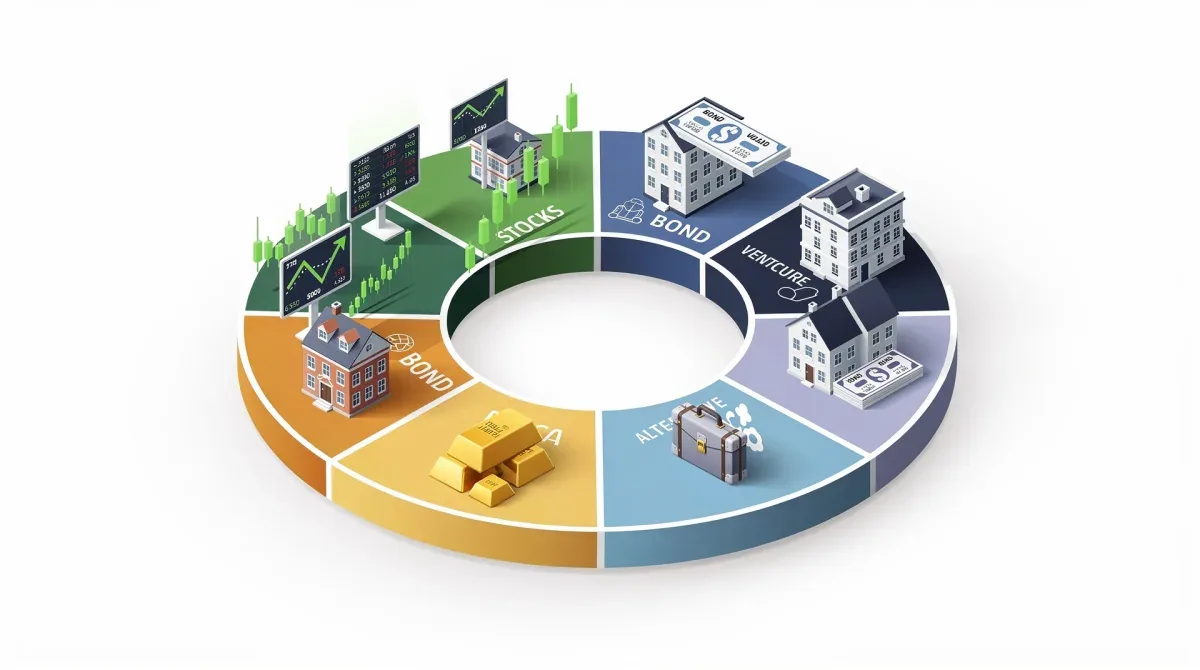
Asset allocation involves distributing investments among categories such as stocks, bonds, and cash, with the appropriate combination depending on personal financial goals and risk tolerance.
Diversification spreads exposure across different investments, helping reduce the effect that losses in one security, company, industry, or asset category may have on an entire portfolio.
For investment portfolio optimization, the objective is not to eliminate risk entirely but to create an investment structure consistent with the investor's financial needs and ability to withstand losses.
The official Investor.gov guide to asset allocation and diversification, published by the U.S. Securities and Exchange Commission, explains how investors can distribute assets according to their investment horizons and tolerance for risk.
Alternative investments, including real estate opportunities, may provide additional exposure, but they also introduce considerations involving liquidity, valuation, fees, and economic sensitivity.
A diversified portfolio should be reviewed periodically because changing market values can alter the original asset allocation and increase exposure to particular investments.
Risk Management and Mitigation Strategies
Risk management is an essential component of investment portfolio optimization because financial markets can experience sudden losses, prolonged downturns, and unexpected changes in economic conditions.
Investors should evaluate the possibility of capital losses, interest rate fluctuations, liquidity constraints, and concentration risks before selecting financial products.
Establishing a clear investment strategy can reduce impulsive decisions and help investors maintain appropriate exposure when markets become volatile or economic expectations change.
Understanding and Managing Market Volatility
Market volatility refers to fluctuations in investment prices over time, which can create uncertainty for investors who may need access to their money.
Regular investing, long-term planning, and periodic rebalancing can help investors manage market movements, although these approaches do not eliminate the possibility of losses.
When applying investment portfolio optimization principles, investors should consider whether their allocation remains appropriate during market downturns rather than automatically changing strategies in response to short-term price movements.
Dollar-Cost Averaging: Invest predetermined amounts periodically while understanding that losses remain possible.
Risk Limits: Establish appropriate exposure levels for individual holdings and asset categories.
Portfolio Rebalancing: Review allocations periodically and adjust them when they move significantly away from financial objectives.
Inflation Hedging and Capital Preservation
Inflation reduces the purchasing power of money over time, making it important for investors to consider whether their assets can support future expenses.
Treasury Inflation-Protected Securities, commonly called TIPS, adjust their principal according to inflation measurements, although market prices may fluctuate before maturity.
Real estate, commodities, and other inflation-sensitive investments can behave differently across economic environments, so they should not be treated as guaranteed protection against rising prices.
TIPS: U.S. Treasury securities with inflation-adjusted principal.
Real Estate Investment Trusts: Investment vehicles providing exposure to qualifying real estate assets.
Commodity Funds: Financial products that may provide exposure to commodity markets but can experience considerable volatility.
Leveraging Technology for Investment Decisions
Digital investment platforms provide access to market data, portfolio tracking, financial research, and analytical tools that can support more informed investment decisions.
Technology can simplify portfolio monitoring and help identify changes in asset allocation, investment costs, and overall exposure to different securities.
However, effective investment portfolio optimization depends on understanding the information these systems provide, since sophisticated software cannot guarantee accurate forecasts or profitable results.
Robo-advisors use automated systems to recommend or manage investments based on information about financial goals, risk tolerance, and investment preferences.
These services may offer convenient portfolio management and automatic rebalancing, but investors should compare advisory fees, investment selection, account restrictions, and the assumptions used to recommend allocations.
Combining reliable technology with sound financial judgment can make portfolio reviews more consistent while allowing investors to remain responsible for their financial decisions.
The Role of Behavioral Finance in Investing
Behavioral finance examines how emotions, personal beliefs, and cognitive biases can influence financial decisions, sometimes leading investors away from their original strategies.
Fear during market declines and excessive confidence during periods of strong returns may encourage investors to sell prematurely or increase risk without sufficient analysis.
Understanding these psychological tendencies is an important part of investment portfolio optimization because disciplined decision-making can help investors avoid unnecessary changes driven primarily by emotion.
One common behavioral pattern is loss aversion, where individuals experience financial losses more intensely than equivalent gains, potentially influencing decisions about selling or retaining investments.
Another concern is overconfidence, which can encourage excessive trading, unrealistic expectations, or concentrated positions in companies investors believe they understand particularly well.
Writing down investment objectives, reviewing decisions periodically, and maintaining realistic expectations can support a more systematic approach to financial planning.
Global Market Dynamics and International Exposure
International investments can provide exposure to companies, industries, and economies that differ from those represented in domestic financial markets.
However, investing outside the United States introduces additional considerations involving currency movements, geopolitical developments, regulatory differences, and market liquidity.
Incorporating international assets into investment portfolio optimization may improve diversification, but the appropriate allocation depends on the investor's circumstances and existing exposures.
Developed and emerging markets can experience different economic conditions, with changes in interest rates, trade relationships, and domestic policies influencing financial performance.
International exchange-traded funds and mutual funds can simplify access to diversified foreign securities, although narrowly focused products may remain concentrated in particular countries or industries.
Investors should also consider fund expenses, currency exposure, tax implications, and overlapping holdings when evaluating international investment options.
Personalized Financial Planning for 2026
Financial planning should begin with identifying personal objectives, including retirement, education expenses, homeownership, or maintaining enough accessible savings for unexpected situations.
Different goals require different investment time horizons, and money needed in the near future generally calls for different risk considerations than assets intended for retirement decades away.
Successful investment portfolio optimization therefore involves designing an investment plan around personal financial needs rather than copying the asset allocation or trading decisions of other investors.
Tax considerations can also influence financial outcomes, making it useful to understand available retirement accounts, investment holding periods, and applicable rules for taxable income.
Readers examining strategies to reduce taxable income in 2026 should consider how tax planning fits within broader savings and investment objectives.
Reviewing financial goals annually, monitoring costs, and consulting appropriately qualified professionals when necessary can help maintain an investment strategy aligned with changing personal circumstances.
Key Point | Brief Description |
|---|---|
Market Opportunities | Evaluate AI, renewable energy, and healthcare while considering valuations, competition, and financial risks. |
Risk Management | Use diversification, appropriate asset allocation, periodic reviews, and realistic financial expectations. |
Strategic Allocation | Balance stocks, bonds, cash, and suitable alternative assets according to personal goals and risk tolerance. |
Technological Edge | Use investment platforms and financial technology to monitor portfolios and support informed decisions. |
Frequently Asked Questions About Investment Portfolio Optimization
What are the primary emerging market opportunities for 2026?▼
Potential areas of interest include artificial intelligence, automation, healthcare innovation, and renewable energy. However, attractive industry prospects do not guarantee investment returns. Investors should evaluate valuations, company finances, market conditions, and potential losses before allocating money to any sector.
How can investors mitigate risks in a volatile market?▼
Investors can manage risk through diversification, appropriate asset allocation, portfolio rebalancing, and realistic investment horizons. Dollar-cost averaging may reduce the influence of purchase timing, but it does not prevent losses or guarantee positive returns during prolonged market downturns.
What role does technology play in optimizing investment portfolio decisions?▼
Financial technology supports investment portfolio optimization by providing analytical tools, automated monitoring, and portfolio management services. AI-powered advisors and other automated platforms can simplify some decisions, although investors should review costs, recommendations, and limitations carefully.
Why is personalized financial planning important for 2026?▼
Personalized planning allows investors to align their portfolios with individual objectives, income, savings, risk tolerance, and investment time horizons. Strategies appropriate for one person may be unsuitable for another, making regular financial reviews essential.
Should I consider international investments when optimizing my portfolio?▼
International investments may provide additional diversification and access to companies outside the United States. However, they also involve currency, political, regulatory, and market risks. The appropriate international allocation depends on personal goals and the investments already held.
Looking Ahead
Investment portfolio optimization in 2026 requires a balanced approach that combines financial planning, diversification, risk management, and careful evaluation of emerging investment opportunities.
Technological developments and global economic changes may create attractive possibilities, but investors should avoid concentrating their portfolios entirely on popular sectors or short-term predictions.
By maintaining clear objectives, reviewing allocations periodically, and understanding the risks associated with each investment, individuals can build a more disciplined strategy for pursuing long-term financial goals.